About
In my free time, I enjoy playing tennis and chess — find me on Chess.com.
I also enjoy reading about topics outside my field. I usually connect ideas from other fields and look for common threads with economics. Below, you can find some of my thinking and the connections I’ve made between history and economics, and between math and philosophy and economics.
Economics and Other Fields

Both historians and economists have the same challenge in some sense. They are trying to learn about something from evidence, but the evidence itself can be misleading.
In economics, sometimes the data can give us a misleading picture. A nice example is the famous shark and ice cream example. When we see an increase in ice cream consumption, we also see higher numbers of shark attacks at the beach.
I want to use this as an example of how an observed relationship in the data does not necessarily mean what we might initially think it means. In this example, summer is actually the common factor: people eat more ice cream and spend more time in the water, which also creates more opportunities for shark attacks.
The data need to be interpreted carefully, and we need to understand the mechanism generating the relationship.
History has a similar problem. Historians reconstruct the past from surviving evidence, but that evidence can be incomplete, distorted, selectively preserved, or even fabricated. So the challenge is not simply collecting evidence, but more importantly forming the right theory to detect the distorted and missing pieces and piece together the right picture.
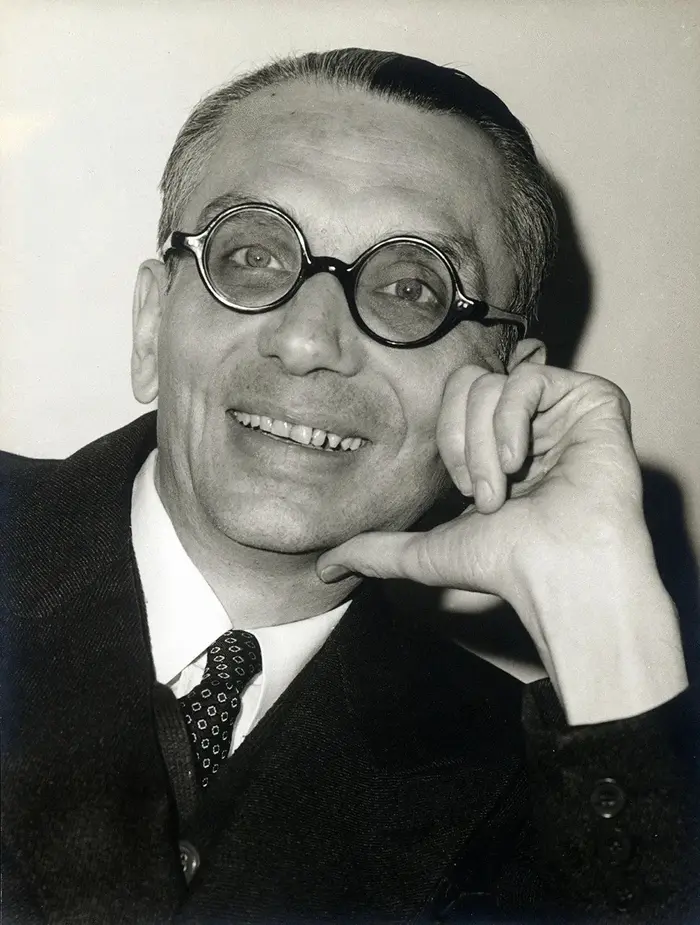
Gödel’s first incompleteness theorem says that any consistent formal system capable of expressing basic arithmetic contains true statements that cannot be proved or disproved within the system. In other words, there will always be statements that cannot be established from its own axioms.
This has made me think more deeply about economic modeling. An economic model also starts with a set of assumptions, and everything we derive from the model ultimately depends on them. Before asking what a model can tell us, perhaps we should first ask what we want it to explain and whether we have chosen the right assumptions to explain it.